Contract Operations
Govern the full life of every contract — before and after signature.
WHEN CONTRACTING BECOMES AN OPERATION
Signing the document is only one moment in the contract's life.
A contract may begin as a draft, but reaching agreement can involve different participants, versions, conditions, approvals and systems. And the work does not necessarily end when the contract is signed.
The real challenge is not producing the contract. It is keeping the contractual relationship coherent as it evolves.
Content keeps changing
Different parties carry different responsibilities
Approval depends on the current situation
The contract continues after signature
Some contracts are not documents to complete, they are relationships to govern over time.
Contract Operations is an operating model for keeping the contract, its content, parties, decisions and history connected throughout its operational life. The agreement can change. Different work can begin and end. The contract remains the continuous reference point.
FROM CREATION TO CLOSURE
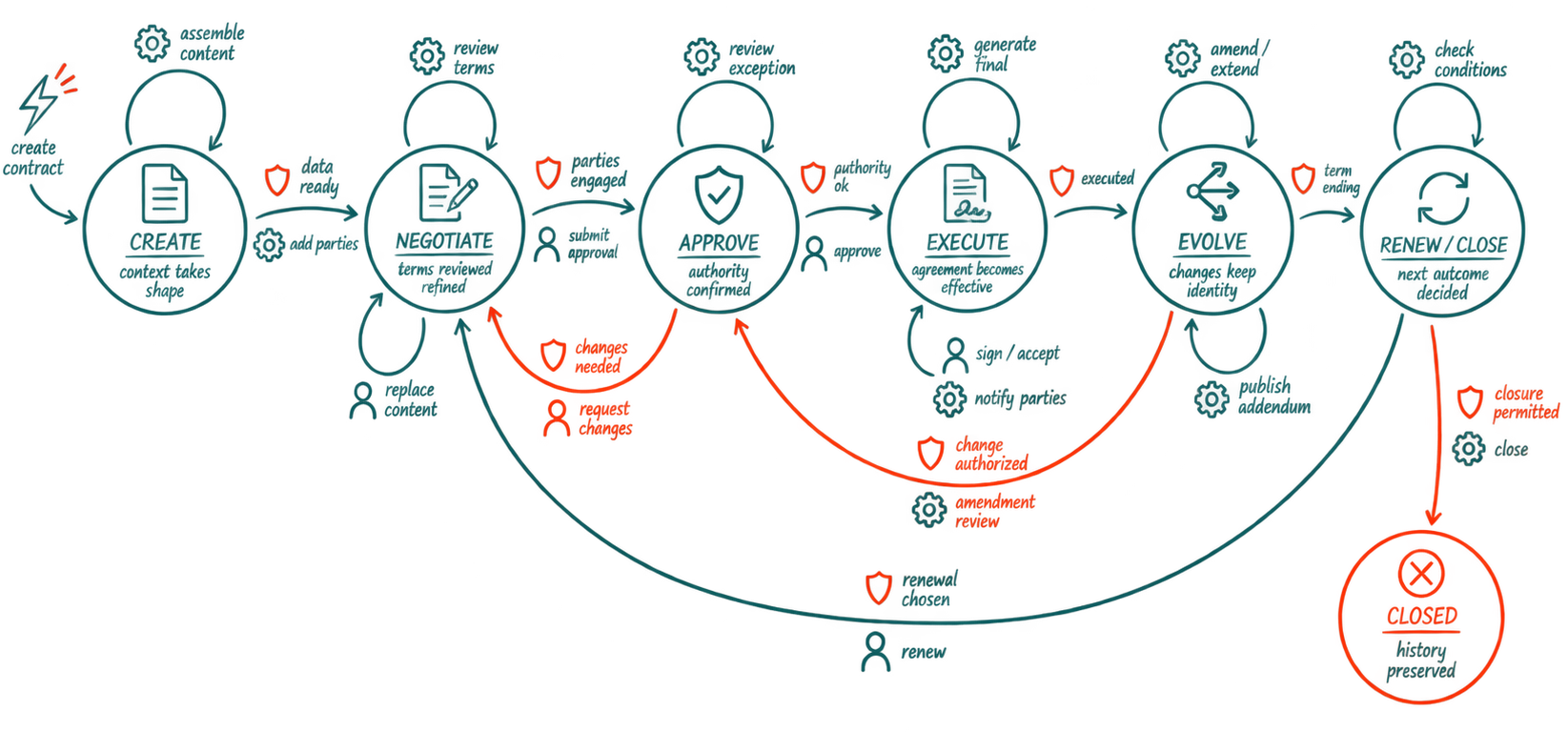
One contract. One governed lifecycle.
A contract becomes easier to govern when its current condition is clear, the actions available at each stage are explicit and change does not break its history.

A contract becomes governable when its current condition is clear, its actions are controlled and every change remains part of the same contractual history.
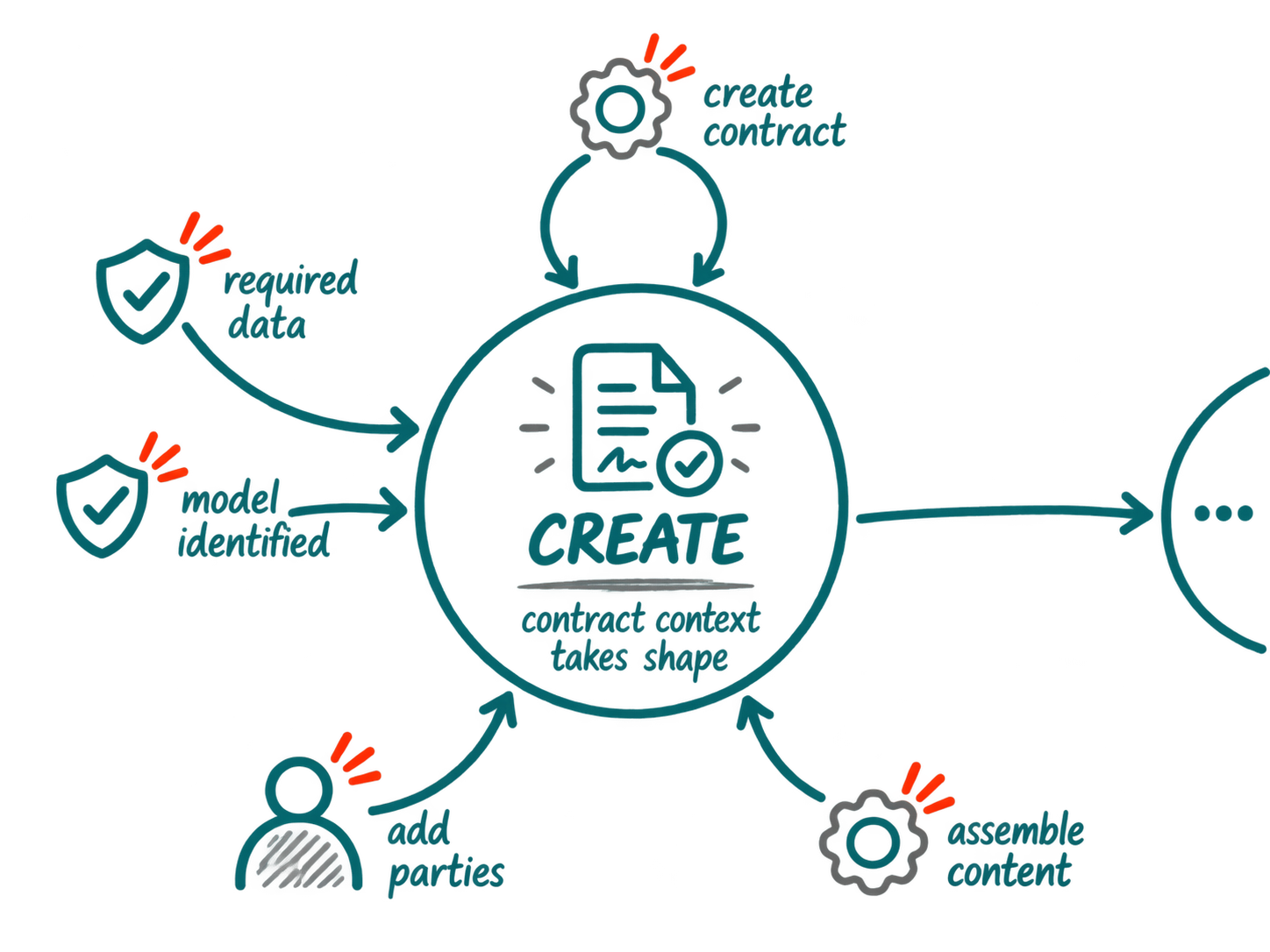
CREATE
The contractual context takes shape.
Define the agreement, parties, contract model and initial governed content.
Typical actions
Transition guards

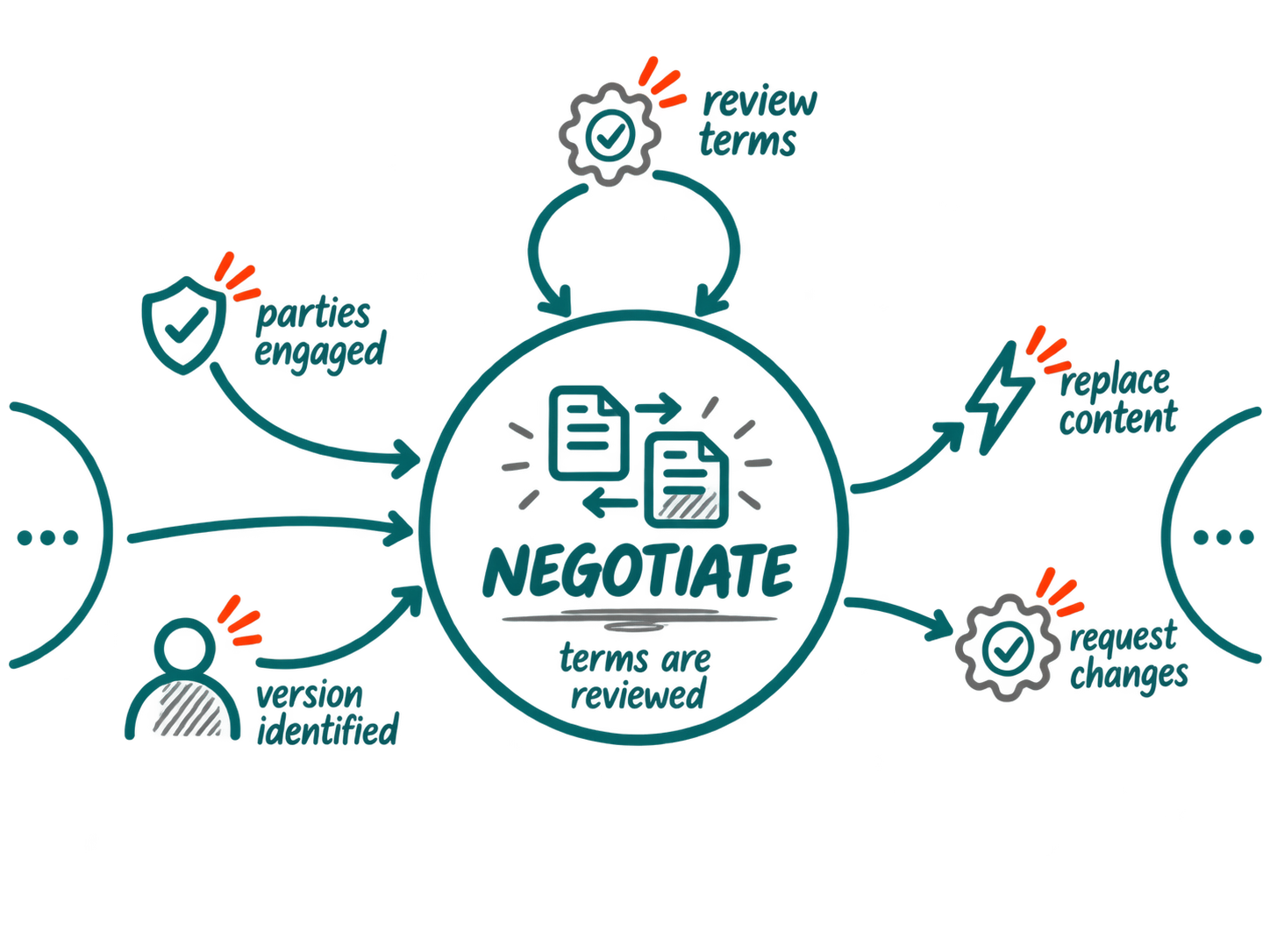
NEGOTIATE
Terms are reviewed and refined.
Participants review contractual content, request changes and evolve the agreement while preserving the current contractual context.
Typical actions
Transition guards

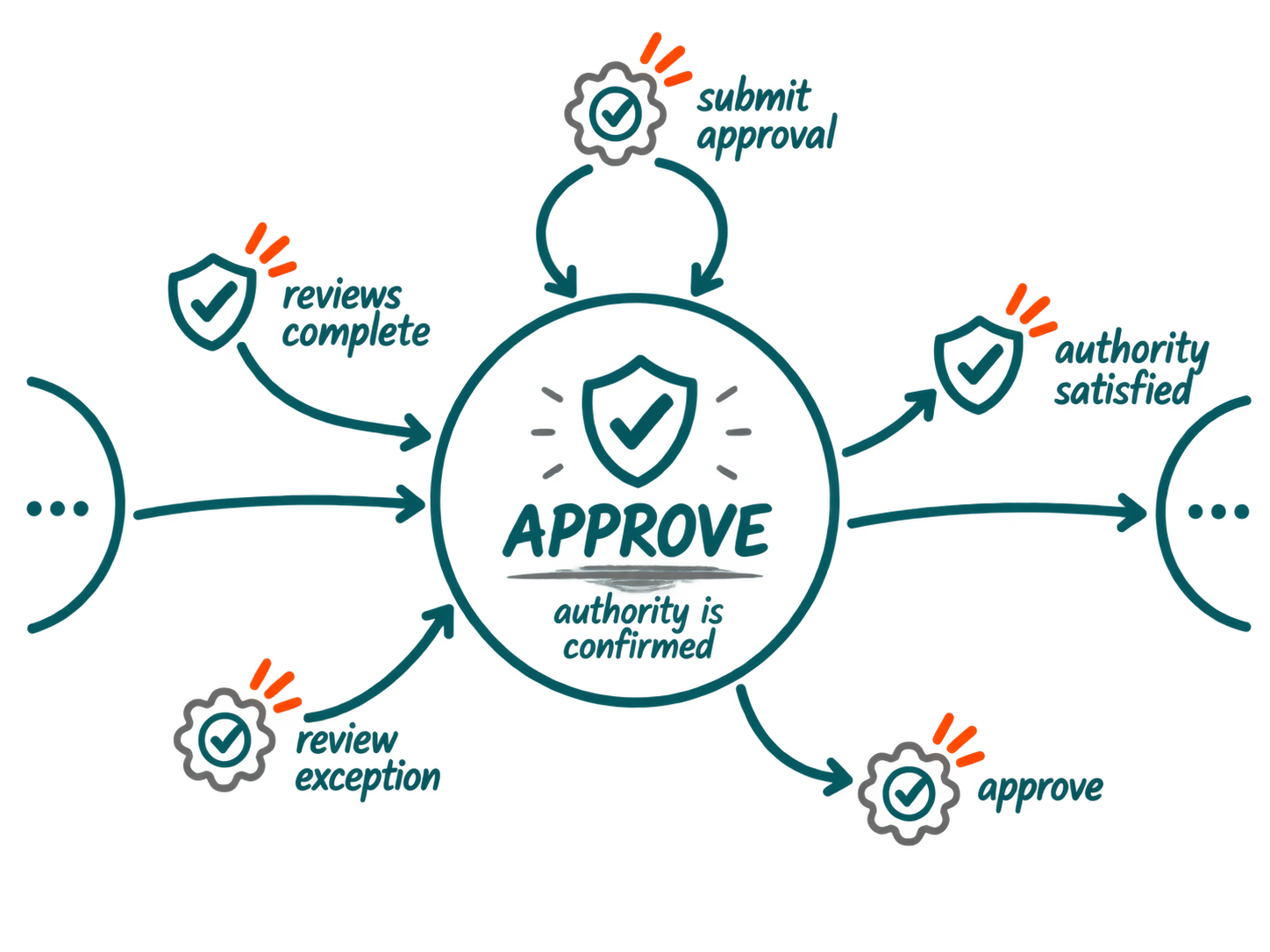
APPROVE
The required authority is confirmed.
Internal reviews, exceptions and approval responsibilities are resolved before contractual execution becomes legitimate.
Typical actions
Transition guards

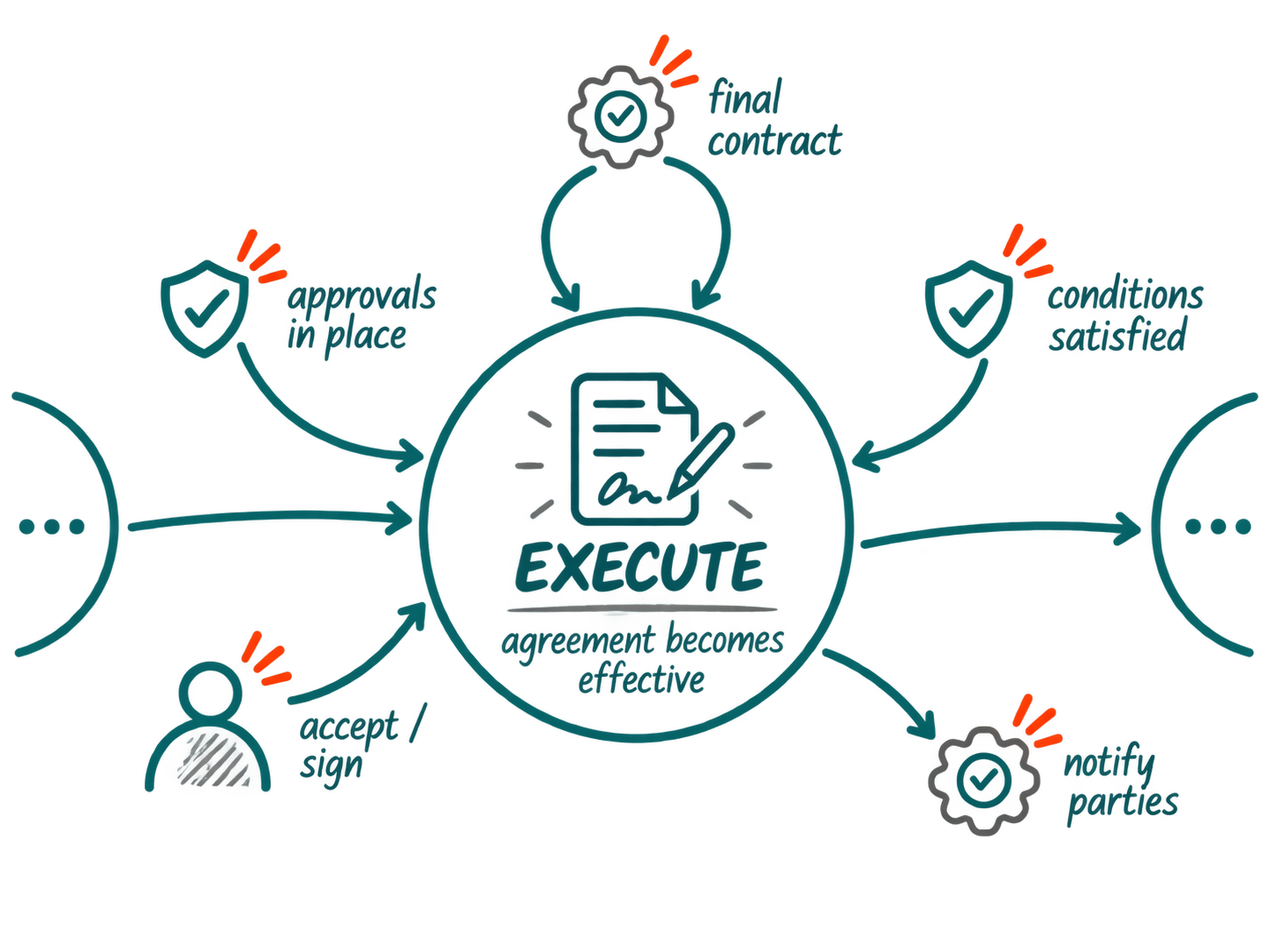
EXECUTE
The agreement becomes effective.
The approved contract is formally accepted, signed or otherwise executed according to the required contractual model.
Typical actions
Transition guards

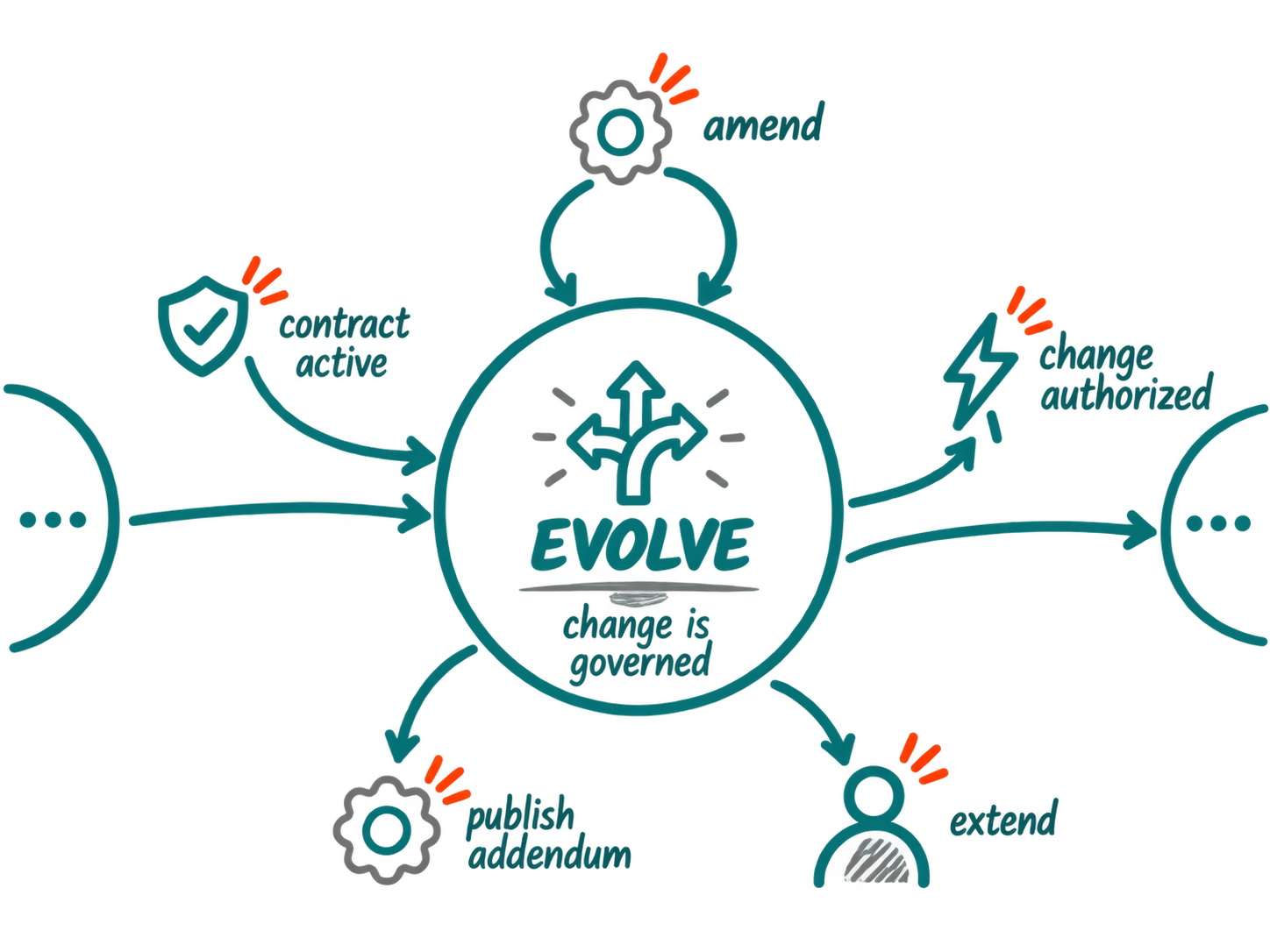
EVOLVE
The contract changes without losing its identity.
New contractual conditions can create amendments, addenda, extensions or other governed changes.
Typical actions
Transition guards

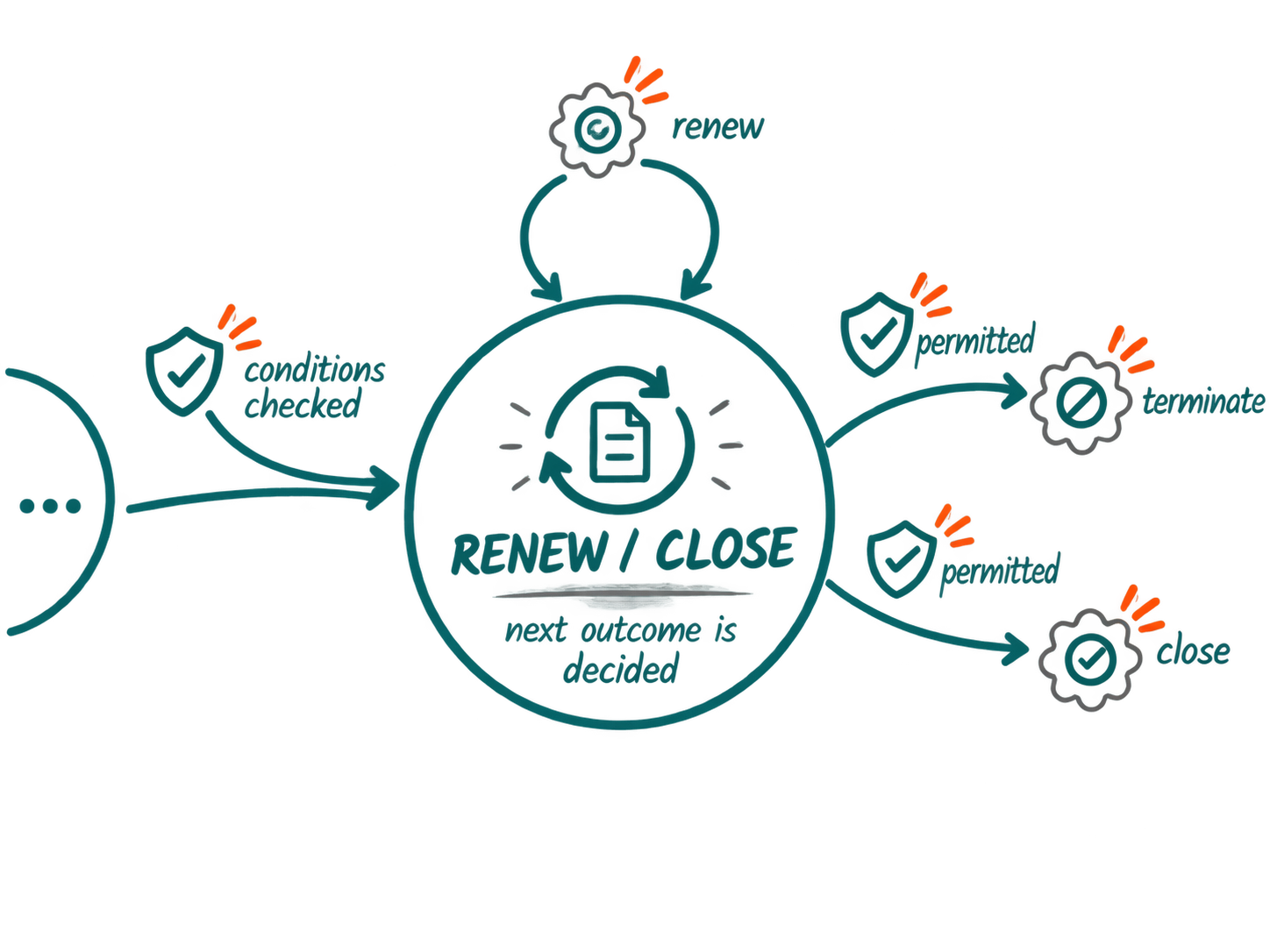
RENEW / CLOSE
The next contractual outcome is decided.
The contract can continue into a new period or reach a governed conclusion while preserving its complete contractual history.
Typical actions
Transition guards

THE COOPERA SHIFT
Keep the contract alive as the relationship changes.
Coopera turns the Contract into a Living Business Object with its own lifecycle, governed content, parties, responsibilities, evidence and history. The agreement remains coherent while negotiation, approval, execution and subsequent contractual work take place.
REPEATABLE BY DESIGN
Start from a proven operating model.
Configure what makes your operation different.
Coopera solutions combine repeatable operational patterns with the rules, systems, participants and requirements specific to your organization.
PROVEN IN REAL OPERATIONS
Contracts change. Continuity remains.
See how Coopera keeps contractual relationships coherent across changing content, parties, approvals, systems and long-term evolution.
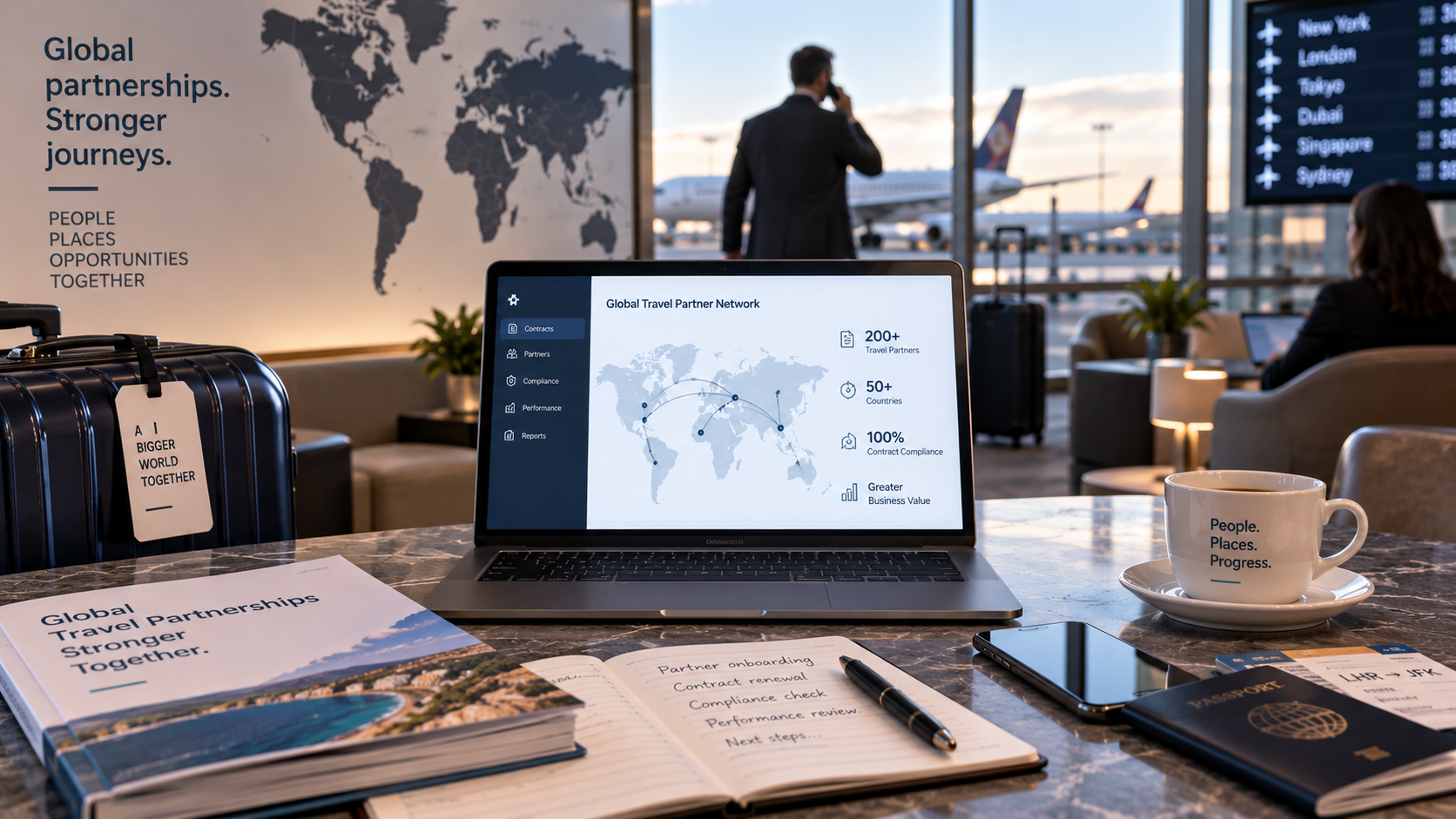
From mass contract publication to individually governed agreements, one persistent commercial context across 150,000+ travel partners, country organizations and global systems.